Dragon
I ChingThe Dragon is the central emblem in a sequence of Yijing line images that traces power from hidden potential to public action, and then to the danger of excess. In the commentary, it represents the Superior Man and, especially, the great man: a figure combining wisdom, dignity, sovereignty, and sagehood. Its changing position makes the image more than a badge of greatness. The Dragon’s movement through the lines teaches that authority depends on timing, vigilance, and knowing when to stop.
Identity and Symbolic Meaning
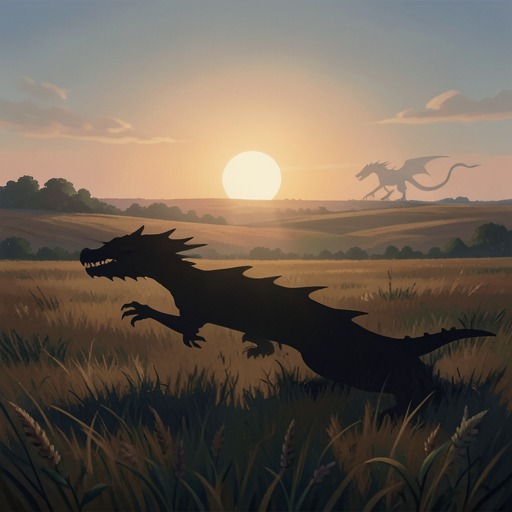
The commentary explains that the Duke of Zhou uses the Dragon to represent the Superior Man, particularly the great man whose attributes resemble those associated with Heaven. The emblem unites qualities that might otherwise appear separate: the creature belongs in water, can move on land, and can also fly aloft. Its range across these domains supports its association with the highest dignity and wisdom, and with sovereignty joined to sagehood. The Dragon is therefore a symbolic figure through which the text considers not only rank, but the proper exercise of exceptional capacity.
The image also belongs to a method of interpretation built from figures and lines. The text presents sixty-four short, symbolic essays based on six-line figures; the King Wen interprets each figure as a whole, while the Duke of Zhou gives a symbolic account of each line. The interpretation of the whole and that of its individual lines are meant to correspond. Within this framework, the Dragon’s appearances turn changes of position into changes of circumstance: the image remains recognizable, but its significance shifts with the line it occupies.
The Dragon’s Course Through the Lines
At the lowest line, the Dragon lies hidden in the deep, and the counsel is that the time is not right for active undertakings. Concealment here marks a condition, not a failure: the emblem’s capacity is present, but action would be premature. At the second line, the Dragon appears in the field, and it is advantageous to meet the great man. The movement from depth to open ground makes potential visible and connects its emergence with the value of encountering an exemplary person.
The third line turns from appearance to sustained self-command. The Superior Man is active and vigilant through the day and remains careful and apprehensive in the evening. The position is dangerous, but the text says there will be no mistake. In the fourth line, the Dragon seems ready to leap but remains in the deep; this uncertain threshold, too, is not a cause for blame. At the fifth line, it is on the wing in the sky, and meeting the great man is again advantageous. The sequence thus distinguishes several kinds of movement—waiting, emerging, laboring vigilantly, approaching a leap, and attaining height—rather than treating power as a single, unchanging state.
Limits, Repentance, and Humility
The top line gives the Dragon’s ascent its necessary counterpoint: it has gone beyond the proper limits, and repentance follows. The commentary interprets this as the ruling sage having passed through the sphere in which his attributes are called for; the time has come to relax. Its paired images make the warning concrete: a line cannot be kept continually taut, and a bow cannot remain forever drawn. Force without pause converts accomplishment into overreach, and the moral implication is that the high will be brought low.
A further paragraph reverses this outcome through the image of a host of Dragons divesting themselves of their heads. The commentary reads the image as a transition to the next hexagram, whose six lines are divided: force gives way to submission, and haughtiness to humility. In the account cited by the commentary, this change brings good fortune. The supplementary image therefore does not simply repeat the warning of the top line; it offers a contrary possibility, in which relinquishing dominance changes the result.
Conflict and the Joined Hexagram Images
The Dragon also appears in the account of the divided-line hexagram, where Dragons fight in the wild and their blood is described as purple and yellow. The commentary connects this scene to the top line of the earlier figure: what was there beyond proper limits occurs here in the wild. The humble subject of the divided line has been transformed into a Dragon and fights the true Dragon, the subject of the undivided line. The contrast joins the two images through a struggle between different line qualities, while the paired colors signify, in the commentary, the colors proper to Heaven and Earth.
The same interpretation treats the divided-line figure’s final paragraph as anticipating a change into the all-undivided figure, a change associated with a fortunate outcome. Read alongside the fighting Dragons, that proposed transformation gives the image a structural role: it links opposing figures and their possible changes, not merely isolated scenes. Across these appearances, the Dragon expresses the text’s larger concern with how strength and submission, authority and humility, must be brought into proper relation.
Interpretation and Significance
The Dragon’s force depends on the interpretive method applied to the Yijing. The translator argues that a literal rendering cannot adequately carry a text whose written characters function as symbols of ideas and whose combinations express thought. Translation must seek the author’s meaning through those symbols, then express it clearly in another language while remaining as exact as possible. That approach helps explain why the Dragon is treated as an emblem whose significance develops across lines, rather than as a literal creature in a continuous narrative.
The commentary also cautions against imposing later cosmological doctrines on the earlier text. In its account of the Great Treatise, it argues that the subject is the ever-changing phenomena of nature and experience, not a fully developed theory of primary matter or creation. The Dragon’s changing course fits that emphasis: its significance lies in shifting circumstances and appropriate conduct. Concealed potential, emergence, vigilance, ascent, excess, and the possibility of humility form a connected pattern in which the emblem makes changing power legible—and insists that greatness includes the capacity to yield.